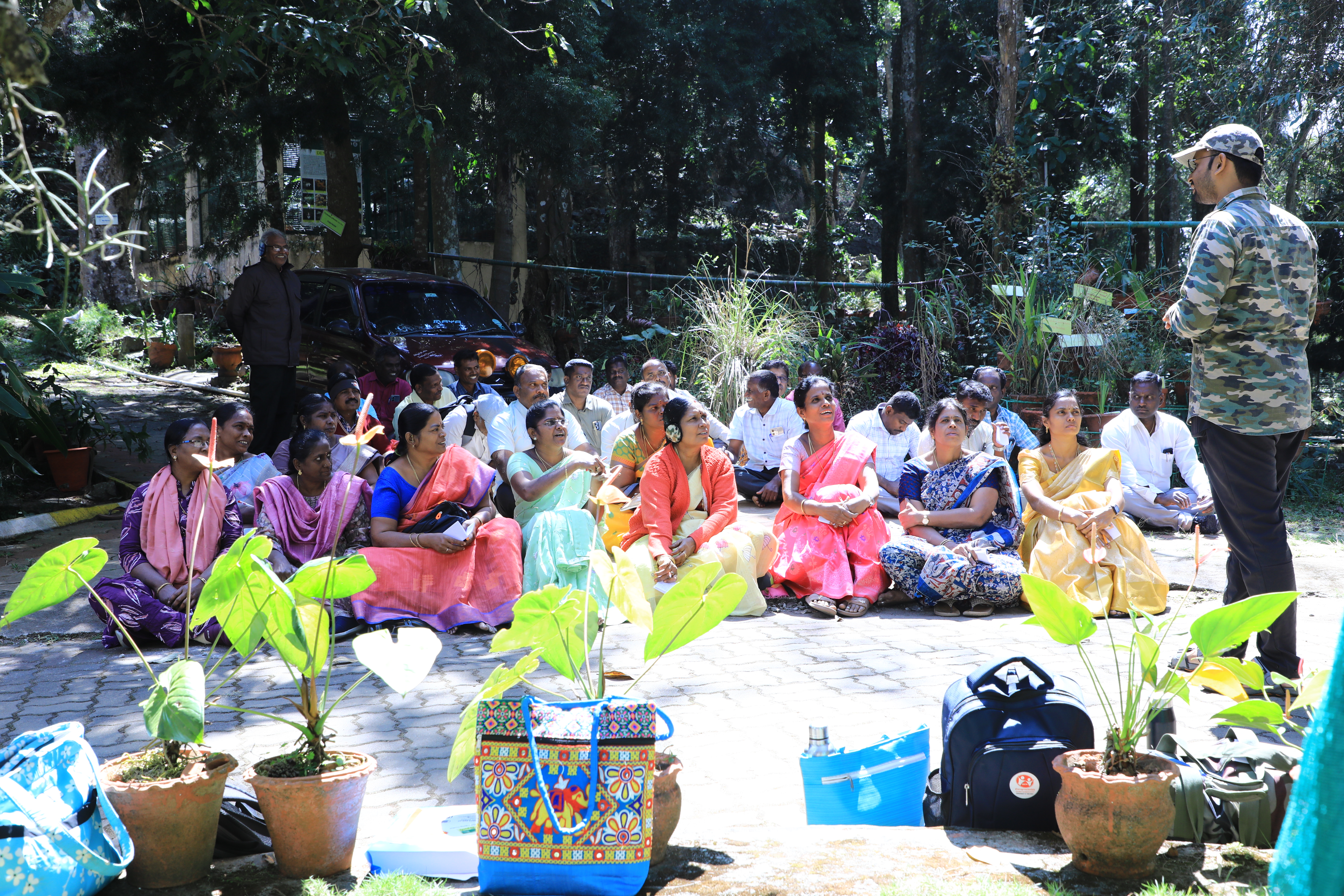
Certified Residential Training Program: Empowering Educators as Climate Champions
View GalleryIntroduction
The long-term success and systemic integration of climate education within our schools cannot rely solely on periodic student events; it requires a permanent, deeply embedded institutional force. The Certified Residential Training Program addresses this need by investing directly in our most valuable educational asset: school teachers. Educators possess the unique ability to shape the mindsets of thousands of students over the course of their careers. However, many teachers feel unequipped to address the rapidly evolving science and socio-economic complexities of climate change. This intensive, three-day residency is designed to close that gap, transforming science teachers, geography educators, and Eco-Club coordinators into authoritative, certified climate leaders.
Capacity Building
The residential training curriculum balances advanced scientific concepts with modern, actionable classroom pedagogy. It is built across three intensive learning modules:
- Advanced Climate Concepts: Teachers engage with leading environmental scientists to simplify complex subjects like carbon budgeting, greenhouse gas emission trajectories, global climate agreements (such as the Paris Agreement), and the socioeconomic impacts of environmental degradation on vulnerable communities.
- Experiential Pedagogy and Toolkit Mastery: The training shifts focus from what to teach to how to teach. Educators are trained in Project-Based Learning (PBL) methodologies, learning to design classroom experiments around sustainability, such as constructing miniature compost systems, setting up school water-harvesting models, or analysing live data from school solar panels to calculate carbon offset metrics.
- Campus Sustainability Auditing: Teachers are trained to treat their own school campuses as micro-ecosystems. They learn to guide students through comprehensive energy, water, and waste audits, transforming the physical school building into a live laboratory for green habits.
Certification Framework
To maintain high academic and administrative standards, the title of Climate Education Professional is earned through a structured evaluation process rather than simple attendance:
- Action Plan Development: During the residency, each educator develops a tailored "Green Action Plan" specific to their home school's geographic and economic context, outlining concrete sustainability initiatives for the upcoming academic year.
- Continuous Assessment: Participants are evaluated through peer-teaching simulations, where they demonstrate their ability to communicate complex climate issues clearly and neutrally without causing eco-anxiety among young students.
- Formal Certification: Upon passing the final institutional assessment, teachers are awarded an official certification backed by the department and its academic partners. This certification serves as a formal recognition of their specialized expertise, enhancing their professional profile within the state educational framework.
Long Term Impact
By institutionalizing teacher training, the Climate Education Initiative establishes a self-sustaining model of climate action. Certified teachers return to their schools as localized hubs of environmental expertise. They revitalize dormant Eco-Clubs, mentor students for the State-Level Quiz, and implement long-term waste reduction and energy-saving measures on their campuses. Most importantly, the teachers ensure that climate literacy is not treated as an isolated, extracurricular afterthought, but is seamlessly woven into the daily educational fabric of every science, geography, and social studies lesson, inspiring generations of climate-conscious citizens.